
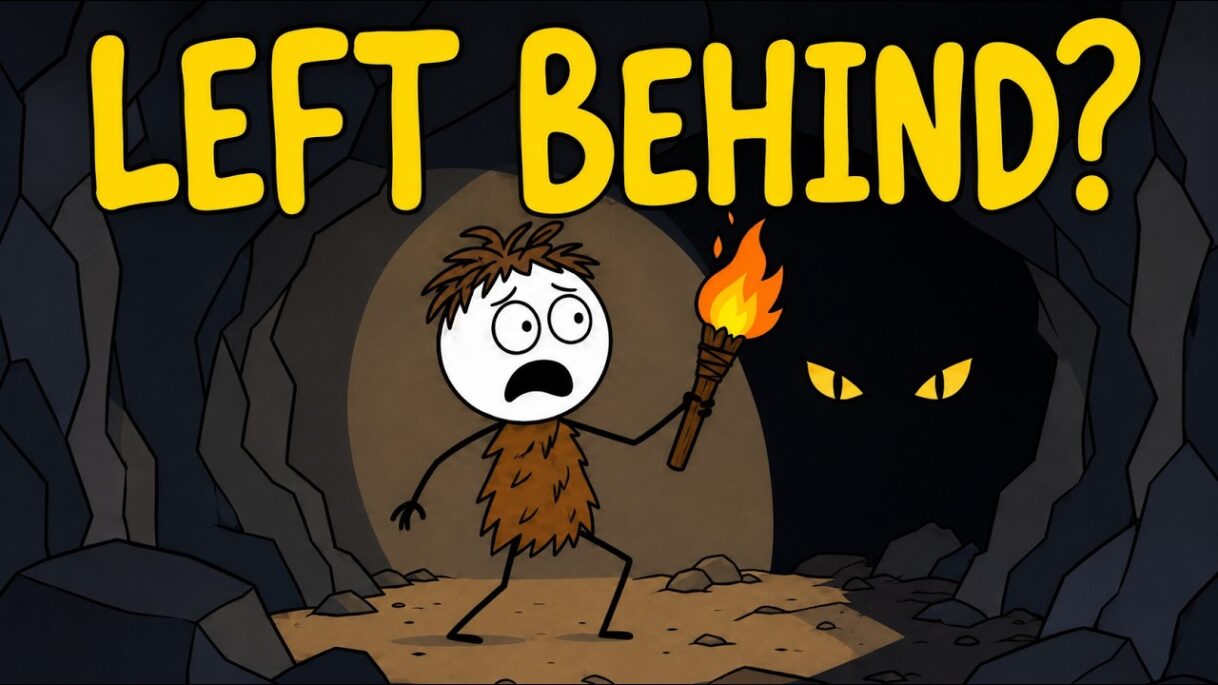
Why Were Ancient Humans So Afraid of Being Alone?
All research and sources are linked below.
📚 RESEARCH & SOURCES:
▸ Social rejection & physical pain — “Does Rejection Hurt? An fMRI Study of Social Exclusion” (2003, Science) — found that social exclusion activates the same brain regions as physical pain. https://doi.org/10.1126/science.1089134
▸ John Cacioppo — “Loneliness: Human Nature and the Need for Social Connection” (2008, W.W. Norton & Company) — landmark research showing the brain treats social isolation as a genuine survival threat.
▸ Shanidar 1 (“Nandy”) — Ralph Solecki, “Shanidar: The First Flower People” (1971, Knopf) — first full account of the Shanidar Cave Neanderthal who survived into his 40s despite a withered arm, a crushed leg, and blindness in one eye.
▸ Erik Trinkaus, “The Shanidar Neandertals” (1983, Academic Press) — detailed paleopathological analysis concluding Shanidar 1’s survival was only possible through sustained group care.
▸ Grandmother Hypothesis — Hawkes, K. et al., “Grandmothering, Menopause, and the Evolution of Human Life Histories” (1998, PNAS) — evidence that older group members’ accumulated knowledge measurably increased group survival. https://doi.org/10.1073/pnas.95.3.1336
▸ Neanderthal plant knowledge — Hardy, K. et al., “Neanderthal Medics? Evidence for Food, Cooking, and Medicinal Plants Entering the Hominin Diet” (2012, Naturwissenschaften) — plant residue in dental calculus at El Sidrón Cave, Spain. https://doi.org/10.1007/s00114-012-0942-0
▸ Division of labor — Marlowe, F. W., “Hunter-Gatherers and Human Evolution” (2005, Evolutionary Anthropology) — data on task specialization increasing group capability among the Hadza. https://doi.org/10.1002/evan.20046
▸ Leopard predation on early hominids — Brain, C. K., “The Hunters or the Hunted? An Introduction to African Cave Taphonomy” (1981, University of Chicago Press) — puncture marks matching leopard canines found on hominid skulls at Swartkrans, South Africa.
▸ Oral tradition & inherited knowledge — Nunn, P. D. & Reid, N. J., “Aboriginal Memories of Inundation of the Australian Coast Dating from More than 7,000 Years Ago” (2016, Australian Geographer) — evidence that critical survival knowledge was preserved across dozens of generations purely through oral transmission. https://doi.org/10.1080/00049182.2015.1077539
▸ Modern-day parallel — Przybylski, A. K. et al., “Motivational, Emotional, and Behavioral Correlates of Fear of Missing Out” (2013, Computers in Human Behavior) — the psychological mechanism behind checking your phone for a reply. https://doi.org/10.1016/j.chb.2013.02.014
————————————————————
PEOPLE & SITES MENTIONED IN THIS VIDEO:
▸ Shanidar Cave, Iraq — Site of the Shanidar 1 skeleton (“Nandy”), a Neanderthal who lived to around 40–45 despite severe disabilities that should have killed him young. His survival is considered some of the strongest physical evidence that Neanderthals practiced long-term communal care.
▸ Ralph Solecki — American archaeologist who led the original 1950s–60s excavations at Shanidar Cave and first proposed that the injured Neanderthal remains found there pointed to compassionate group behavior.
▸ Erik Trinkaus — Paleoanthropologist whose detailed skeletal analysis of Shanidar 1 remains the primary scientific basis for what is known about his injuries and survival.
▸ El Sidrón Cave, Spain — Neanderthal site where dental calculus analysis revealed traces of medicinal plants, suggesting deliberate self-treatment of illness tens of thousands of years ago.
▸ Swartkrans, South Africa — Early hominid cave site where skull damage matching leopard bite marks provided direct fossil evidence of predation on early humans.
———————————————————
#ancienthumans #prehistory #cavepainting #humanhistory #archaeologynews #stoneage #survival #caveart #firemaking #history #explainer #animation #education #paleolithic #anthropology
source

