
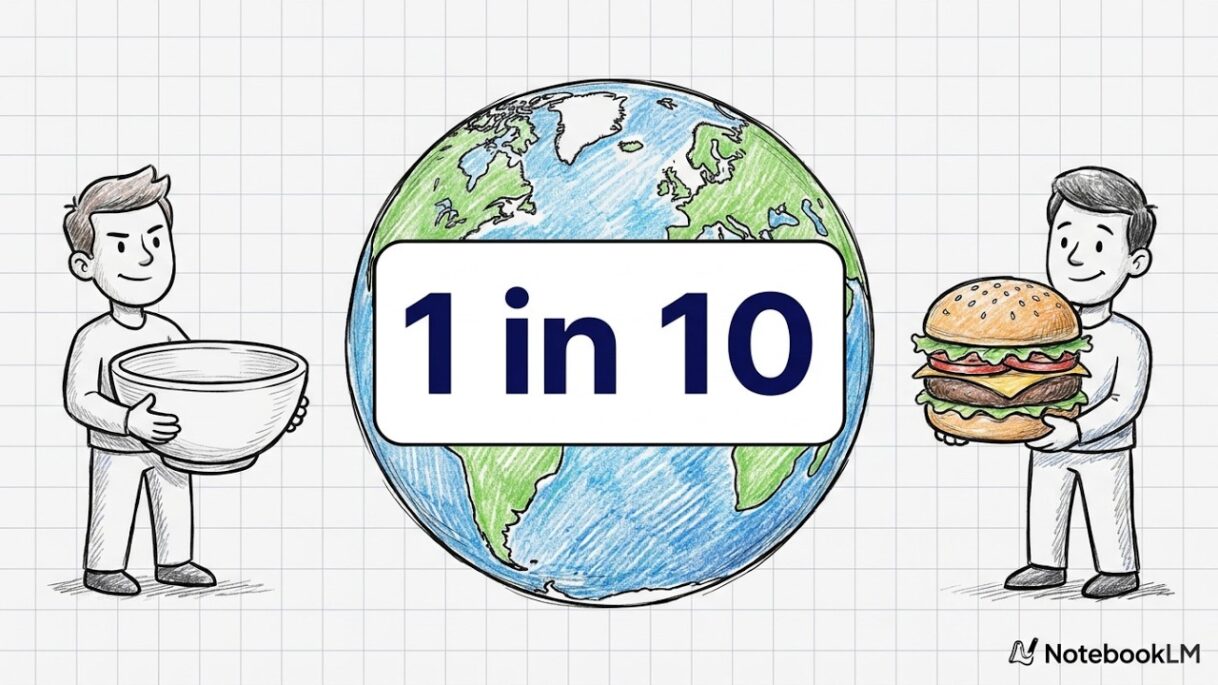
In this Human Nutrition lesson, we begin the global nutrition playlist by exploring the worldwide nutrition crisis. This video explains the scale of global malnutrition, the populations most affected by undernutrition, and the systemic factors that keep this crisis going.
The lesson begins by defining malnutrition as an imbalance in nutrient and energy intake. Students will learn that malnutrition includes both overnutrition, which is linked to overweight and obesity, and undernutrition, which occurs when people experience a chronic lack of energy and nutrients over time.
Next, the video focuses on undernutrition as a major global health concern. Students will learn that hundreds of millions of people worldwide face undernourishment and that this problem is connected to poverty, disease, poor diet quality, limited resources, conflict, and disrupted food systems.
The lesson then explains which populations are at highest risk. Students will learn why pregnant women, infants, young children, and older adults are especially vulnerable. The video also explains stunting, including how undernutrition during the first two years of life can affect physical growth, cognitive development, immune function, and future health.
Next, students will examine the major roots of undernutrition. The video explains how poverty, overpopulation, war, political unrest, depleted farmland, lack of sanitary water, distribution problems, inadequate roads, and parasitic infections all contribute to global undernutrition.
Finally, this lesson explores the global impact of undernutrition and the cycle of poverty it can create. Students will learn how chronic undernutrition can reduce cognitive development, limit adult productivity, compromise reproductive health, and affect future generations. The video also introduces intervention strategies such as improving breastfeeding rates, increasing access to safe water, using therapeutic foods, and supporting nutrition education for older adults.
In this video, you will learn:
• What malnutrition means
• The difference between overnutrition and undernutrition
• Why undernutrition is a global health crisis
• How many people are affected by undernourishment
• Why pregnant women are at higher risk
• Why infants and young children are especially vulnerable
• Why older adults may develop chronic undernutrition
• What stunting is
• How early undernutrition affects lifelong health
• Why poverty is a major driver of undernutrition
• How war, political unrest, and infrastructure affect food access
• Why sanitary water matters for nutrition
• How parasitic infections worsen undernutrition
• How undernutrition affects child mortality
• How undernutrition can create a generational cycle of poverty
• What intervention strategies can help reduce undernutrition
This video is ideal for students taking Human Nutrition, Nutrition, Health Science, Dietetics, Food Science, Biology, Public Health, Global Health, and other introductory health science courses.
This video is intended for educational purposes only and does not provide medical advice, diagnosis, or treatment. Please consult a qualified healthcare professional for guidance related to your individual health, medications, or supplement use.
Timestamps
0:00 Introduction to the global nutrition crisis
0:29 Global undernutrition statistic
0:50 Global nutrition as a systemic crisis
1:01 Lesson roadmap
1:19 Defining the global crisis
1:23 What malnutrition means
1:36 Overnutrition
1:46 Undernutrition
2:03 Focus on undernutrition
2:09 Global undernourishment prevalence
2:24 COVID-19 and food system disruption
2:36 Populations at highest risk
2:51 Pregnant women
3:04 Infants and children
3:11 Older adults
3:26 Stunting
3:45 Long-term effects of stunting
4:08 Roots of undernutrition
4:17 Socioeconomic factors
4:29 Environmental factors
4:38 Infrastructure problems
4:48 Biological factors
4:57 Poverty as the leading risk factor
5:23 Global impact and mortality
5:35 Regional undernutrition statistics
5:57 Northern America and Europe comparison
6:10 Under-5 mortality rate
6:28 Nigeria, India, and Iceland comparison
6:50 Consequences and interventions
6:56 Generational cycle of undernutrition
7:31 Intervention strategies
7:43 Breastfeeding and safe water
7:54 Therapeutic foods
8:01 Nutrition education for older adults
8:11 Final recap
8:17 Preview of micronutrient deficiencies
Hashtags
#HumanNutrition #GlobalNutrition #Malnutrition #Undernutrition #GlobalHealth
source

