
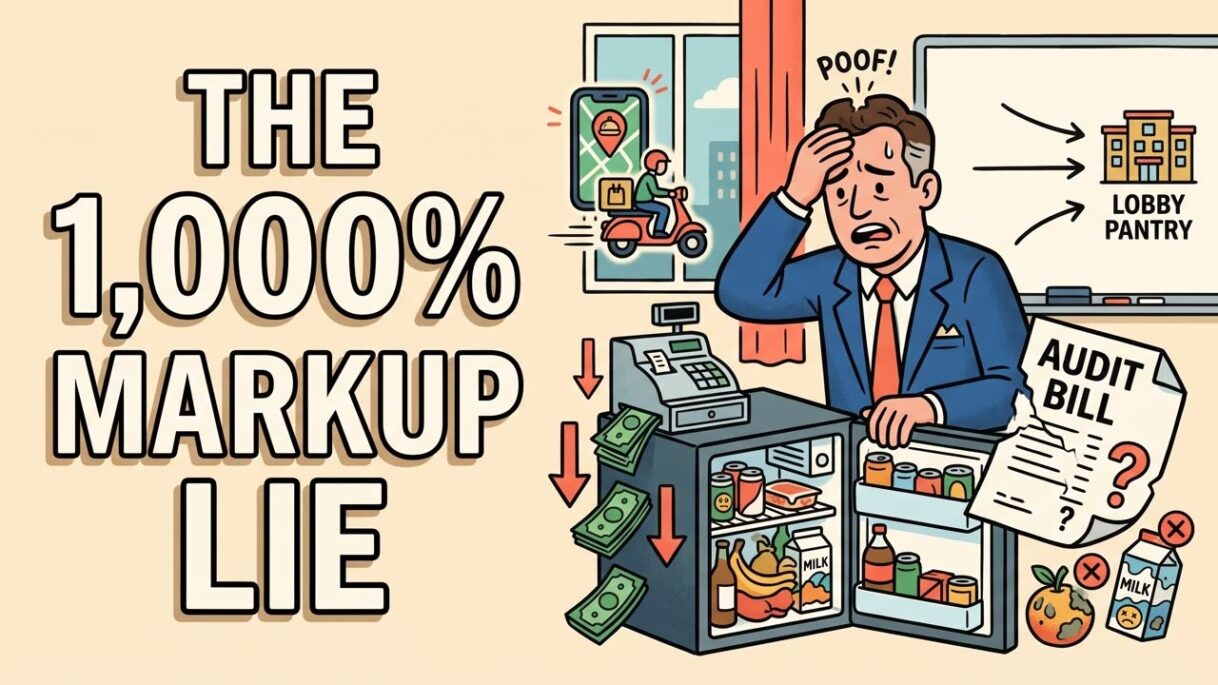
You walk into a high-end hotel room, open the minibar, and see a bottle of water priced at seven dollars and a tin of cashews for fourteen. To any traveler, it looks like a masterclass in price gouging—a captive market being squeezed for every cent. But behind the scenes of the global hospitality industry, that humming fridge is actually a financial black hole. Over the last decade, major brands like Marriott, Hilton, and Hyatt have been quietly ripping minibars out of millions of guest rooms, replacing them with empty fridges and lobby marketplaces.
In this investigation, Economics Made Weird breaks down the counterintuitive unit economics of the $14 cashew. We explore the architectural origin of the minibar trap, starting with the 1974 Hong Kong Hilton experiment that initially sent profits skyrocketing. However, the physical reality of maintaining a decentralized grocery store across hundreds of locked rooms introduced three silent killers: astronomical labor costs, extreme inventory spoilage, and the Front Desk Liars Club—the constant, toxic friction of billing disputes that destroyed customer lifetime value.
How did hotels restructure this market to shift the labor cost back onto the consumer? And how did the rise of gig-economy delivery apps finally shatter the hotel’s geographic monopoly on late-night convenience? This is the story of how friction always wins in the end, and why the most expensive snack in the world was never actually profitable. Subscribe to Economics Made Weird for more deep dives into the strange incentives driving the modern world.
Chapters:
0:00 The Nine-Dollar Toblerone Illusion
1:56 The 1974 Hong Kong Experiment
5:16 The Front Desk Liars Club
8:02 Shifting Labor to the Consumer
12:04 How DoorDash Killed the Monopoly
Production note: This documentary uses AI-assisted narration, editing, and illustrative visuals for educational documentary storytelling.
#Economics #HospitalityIndustry #HotelBusiness #Minibar #Marriott #Hilton #UnitEconomics #BusinessStrategy
Economics Made Weird
source

