
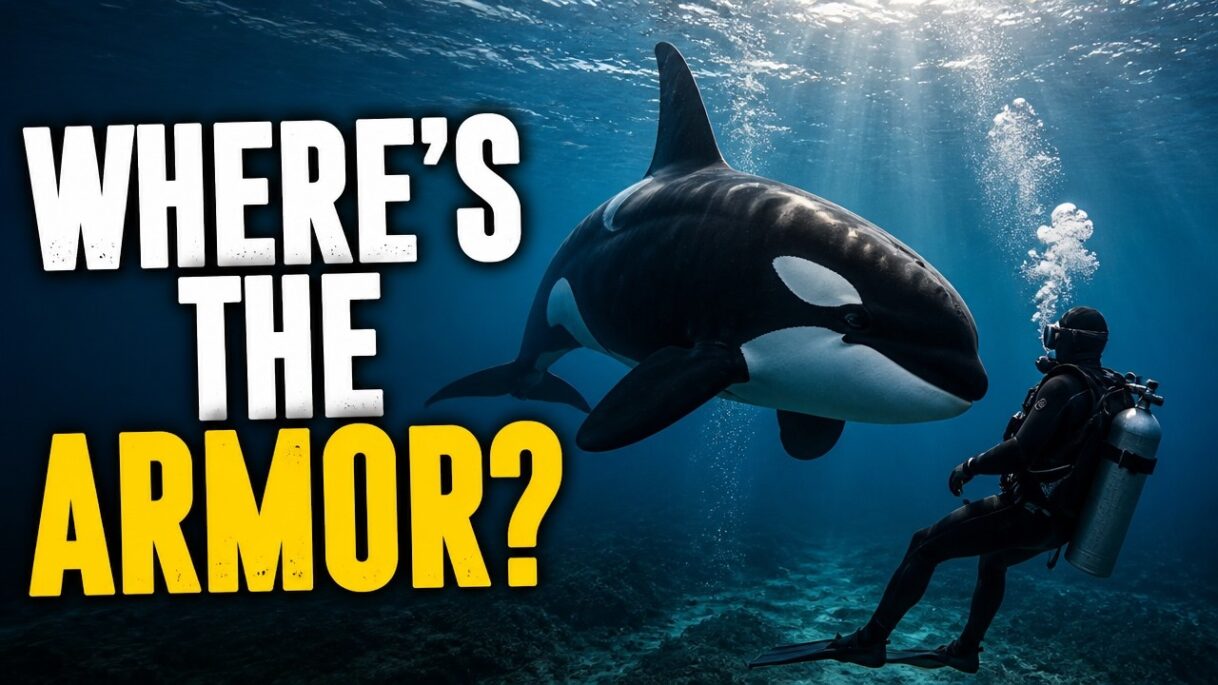
Why don’t orcas attack humans—even though they are powerful enough to kill us in seconds?
Wild orcas hunt seals, sharks, dolphins, and even whale calves with extraordinary speed, intelligence, and teamwork. Yet there are no verified records of a wild orca killing a human. That contradiction has inspired myths, viral videos, and theories about respect, intelligence, fear, and even a secret bond between orcas and people. But the real explanation may be far stranger.
In this wildlife documentary, we investigate what science and documented encounters actually suggest about orca behavior. You’ll discover why a wild encounter is completely different from an incident involving an orca in captivity, why damaging a boat is not the same as hunting a person, and why physical power does not automatically turn an animal into a predator of humans.
Orcas, also known as killer whales, are apex predators—but they are also highly selective hunters. Different populations develop specialized diets and hunting traditions that can be passed down through families for generations. Some pods hunt salmon. Others target seals, sea lions, porpoises, sharks, or whale calves. Some have learned to wash seals from ice, strand themselves temporarily on beaches, or hunt great white sharks with terrifying precision.
So why haven’t humans become part of that menu?
The answer may involve echolocation, prey recognition, social learning, ecological opportunity, and something close to animal culture. Humans may be easy for an orca to reach, but we are rare, scattered, unpredictable, and do not appear to offer the kind of repeatable reward that allows a hunting technique to develop, spread, and survive across generations.
We also examine the rare documented cases that are often presented as evidence of a wild orca attack on a human. A bite, close approach, collision, or boat interaction can be dangerous, but it is not automatically predation. A true hunting pattern would leave repeated attacks, pursuit, feeding behavior, recognizable techniques, and social transmission. That pattern has not been documented in wild orca populations.
This does not mean wild orcas are harmless, friendly, or governed by a moral rule. They are intelligent, powerful wild animals capable of investigation, contact, defensive behavior, and unpredictable reactions. The absence of a documented human-hunting pattern is remarkable—but it is not a guarantee of safety or an invitation to approach them.
This ocean documentary explores one of the strangest questions in marine biology: how can one of the most capable ocean predators notice a vulnerable human, approach closely, and then choose something else?
Watch to the end to understand the unsettling difference between being noticed by an orca and being selected as prey—and why specialization may explain the mystery better than kindness.
▶ Subscribe for more wildlife documentaries, ocean mysteries, animal behavior, marine life, and science explained.
Follow us:
#Orcas #KillerWhales #WildlifeDocumentary
source

