
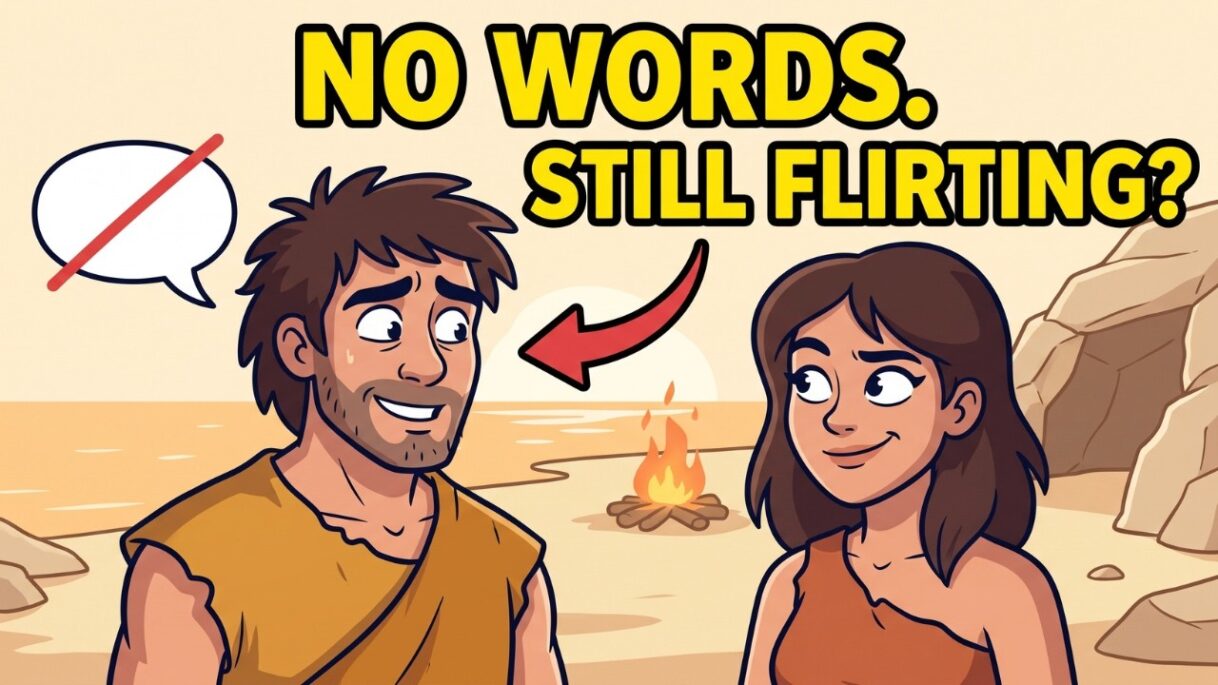
No dating apps. No text messages. No carefully rehearsed pickup lines. So how might early humans have shown someone they were interested?
In this episode of Simple History Show, we explore the possible roots of human flirting—from quick glances and raised eyebrows to shared laughter, personal ornaments, gifts, and movement.
Could a string of shells have worked like an ancient profile picture? Could a beautifully crafted stone tool have helped someone stand out? And what can modern research actually tell us about relationships in the distant past?
Through 2D cartoon illustrations and accessible storytelling, we look at:
• The eyebrow flash and other nonverbal signals.
• What playful behavior in other primates can tell us about laughter.
• Ancient shell beads, red ochre, and personal expression.
• Food sharing and the possible social meaning of gifts.
• The debated idea that hand axes could have signaled skill.
• Music, dance, touch, and social bonding.
• What Neanderthal ancestry reveals—and what it cannot tell us about individual encounters.
• Why giving someone your attention still matters today.
There is no recording of the first flirtation. Archaeology, primate behavior, and modern studies offer clues, but they do not reveal exactly what our ancestors felt or intended. The origins of language are also debated: “without words” does not mean that all early humans were silent or unable to speak. This video explores hypotheses and comparisons alongside archaeological and genetic findings.
💬 Which idea surprised you most: the eyebrow flash, shell jewelry, or the hand-axe hypothesis? Tell us in the comments.
🔔 Subscribe to Simple History Show for more illustrated stories about early humans, ancient civilizations, and everyday life in the past.
History is full of questions. Let’s explore them together.
#EarlyHumans #HumanEvolution #PrehistoricLife #SimpleHistoryShow #Prehistory #AncientHistory #NonverbalCommunication #BodyLanguage #Flirting #Archaeology #Neanderthals #animatedhistory
source

