
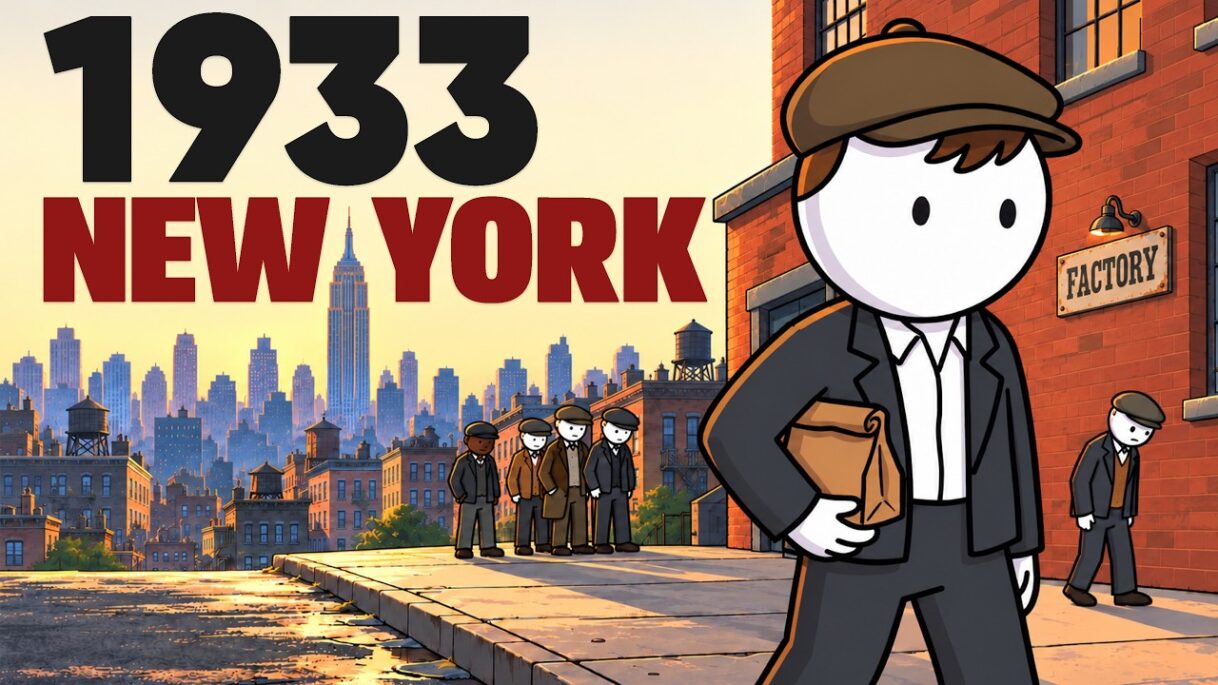
What if you lived in New York in 1933 during the Great Depression? With no steady job and rent coming due, how would you keep your family going? Experience daily life on the Lower East Side through an animated story of job hunting, stretched meals, and small moments of hope.
You leave a factory with lunch still in a paper bag and another address to try. At home, your wife is looking for sewing work, your child needs a patched sleeve, and the rent envelope is still short. Every nickel matters, but so do the people next door.
In this video, explore unemployment and unequal access to work, the five-cent subway fare, family life in a tenement apartment, Home Relief assistance, and the everyday resourcefulness that helped people get through hard times.
💬 What did your family mend, save, or share during hard times? Tell us in the comments.
🔔 Live Your Era brings the past to life through warm, animated stories told from your perspective. Subscribe for another year, another place, and another life.
#GreatDepression #NewYork #LiveYourEra
📖 CHAPTERS
00:00 Lunch Without a Job
00:24 Nobody’s Hiring
01:02 The Price of Getting There
01:33 Dinner Takes Work
02:08 The Rent Envelope
02:37 Asking for Help
03:14 Across the Hall
03:42 A Day’s Pay
04:15 Packing for Tomorrow
📚 FOR FURTHER READING & SOURCES;
Tenement Museum: Home ReliefDepression-era assistance with food, clothing, and rent on the Lower East Side.
Tenement Museum: What Gets Passed DownHousehold objects, family memories, and the experience of applying for relief.
Federal Reserve Bank of St. Louis: The Great DepressionEducational background on unemployment and the economic crisis.
Library of Congress: Race Relations in the 1930s and 1940sHistorical context on racial discrimination and unequal opportunities.
📌 ABOUT THIS STORY
This video is a fictional narrative informed by historical facts, not the biography of a specific person or family. Characters, dialogue, and household events are imagined to explore everyday life in Depression-era New York. Experiences varied across households and communities, and access to work and assistance was unequal. The illustrations are artistic interpretations, not archival footage.
Live Your Era. Step into the past. Live the story.
source

